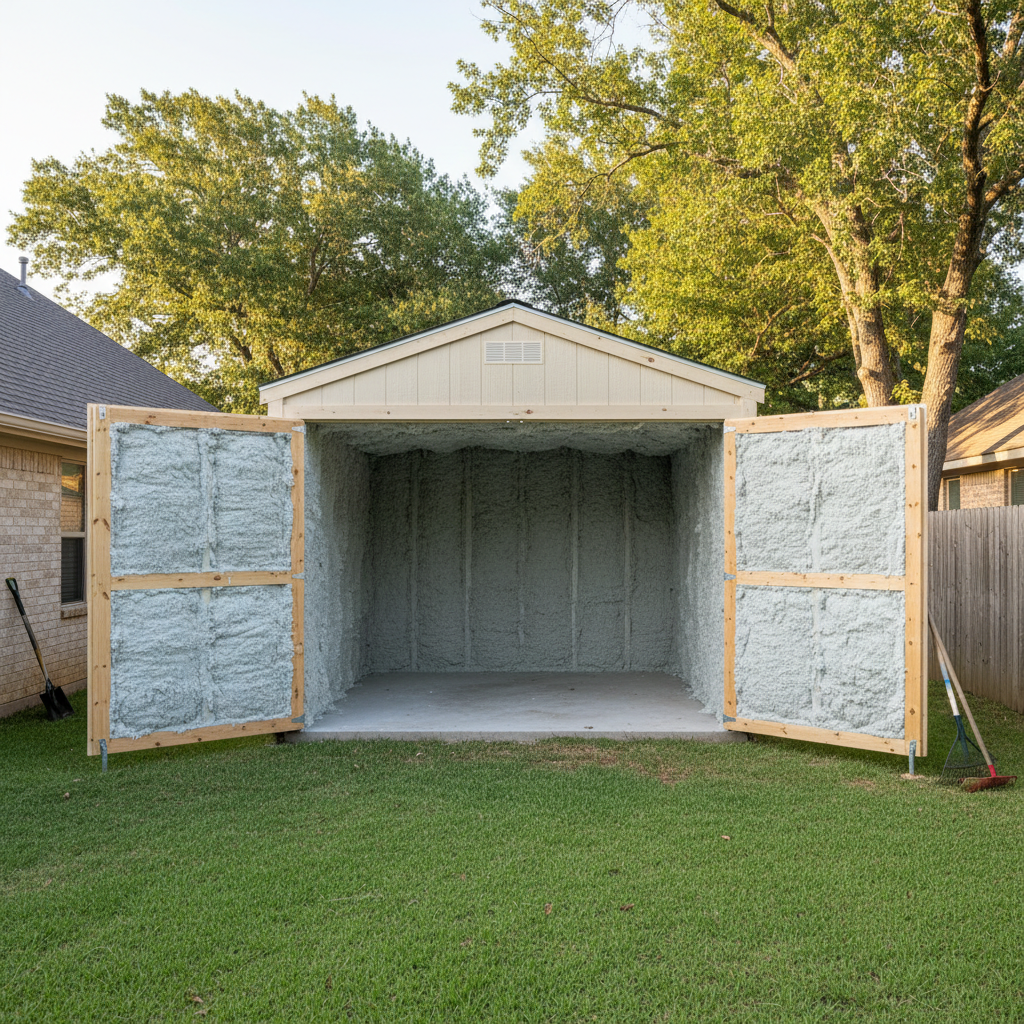
So, you've got a shed out back, and you're finally ready to make it more than just a glorified storage box. Maybe it's going to be a workshop, a home office, a she-shed, or just a place to keep your tools from freezing solid in winter or baking in the summer heat. Whatever the reason, insulating your shed is a smart move, especially with our wild Georgetown weather. But how do you even start planning a project like that?
I've been doing this a long time here in Central Texas, and I've seen all sorts of sheds and all sorts of projects. Let me break down what you need to know to get your shed insulation project done right, without any surprises.
Project Timeline: What to Expect
Let's talk timing. This isn't a huge, weeks-long renovation, but it's definitely not a 30-minute job either. From your first call to the final cleanup, here's a typical breakdown:
- Initial Contact & Quote (1-3 days): You'll reach out to a few local insulation companies, like us at Skyline Insulation Inc. We'll set up a time to come out, look at your shed, measure it up, and talk about what you're hoping to achieve. We'll discuss options – usually spray foam or batt insulation are the most common for sheds, depending on your budget and goals. After that, you'll get a detailed quote.
- Decision & Scheduling (1-5 days): You'll review the quotes, ask any follow-up questions, and pick the contractor you feel best about. Once you've made your choice, you'll sign a contract and get on their schedule. Good companies are usually booked a little in advance, so don't expect them to be there tomorrow.
- Preparation (Your part, 1-3 days before install): This is where you come in. We'll give you a clear list of what needs to be done, but generally, it involves clearing out the shed. More on that in a bit.
- Installation Day (1 day): For most sheds, the actual insulation installation is a one-day job. A small shed might take half a day; a larger one could take a full day. We'll show up, get the work done, and clean up.
- Curing/Ventilation (1-3 days, mostly for spray foam): If you go with spray foam, there's a recommended curing period. You'll want to keep the shed well-ventilated and avoid spending extended time in there. Your contractor will tell you exactly how long.
So, from start to finish, you're probably looking at about a week or two. It depends on how quickly you make decisions and how busy the contractor is. It's not a huge commitment, but it does require a little planning.
What to Expect During the Process
When the crew shows up, you should expect professionalism. They'll likely have a truck or trailer with their equipment. If it's spray foam, there will be hoses run from the truck to the shed. It can be a bit noisy, especially if they're running generators or the spray foam rig. They should take precautions to protect anything nearby that shouldn't get insulation on it, like windows or doors that aren't being insulated.
For batt insulation, it's a bit quieter. Still, it involves cutting and fitting insulation into wall cavities and the ceiling. Either way, the crew should be respectful of your property, wear appropriate safety gear, and be able to answer any questions you have on site.
How to Prepare Your Shed for Insulation
This is probably the most important part for you, the homeowner, to get right. Proper preparation makes the installation go smoothly and prevents delays or extra charges. Here's your checklist:
- Empty it out: This is non-negotiable. Every single item needs to be out of the shed. Tools, lawnmowers, boxes, everything. We can't insulate around your stuff. If there's anything heavy you can't move, let your contractor know way ahead of time.
- Clean it up: Sweep out any dirt, dust, cobwebs, and debris. The cleaner the surfaces, the better the insulation will stick (especially for spray foam) and the more efficient the installation will be.
- Address repairs: Fix any leaks in the roof or walls. Replace any rotten wood. Insulation won't solve moisture problems; it'll just trap them. Make sure the structure is sound.
- Clear the perimeter: If the crew needs to work on the exterior walls (for example, if they're drilling small holes for dense pack cellulose, though that's less common for sheds), make sure there's a clear path around the outside of the shed. Move any planters, grills, or other obstacles.
- Ensure access to power: If the crew needs to plug in tools, make sure there's an accessible outdoor outlet or be prepared to run an extension cord from your house.
Seriously, don't underestimate the importance of clearing out the shed. We've had to reschedule jobs because sheds weren't ready, and that's a headache for everyone.
Questions to Ask Before Signing a Contract
Before you commit, you want to be sure you're working with a reputable company. Here are some questions I'd ask if I were in your shoes:
- What specific type of insulation do you recommend for my shed, and why? They should be able to explain the pros and cons of spray foam versus batts, or whatever they suggest, for your specific situation.
- What R-value will this achieve? R-value measures thermal resistance. Higher R-value means better insulation.
- Is a vapor barrier included or necessary? Depending on the insulation type and your shed's use, a vapor barrier might be critical to prevent moisture issues.
- What's the total cost, and what does that include? Get a written, itemized quote. Make sure it covers materials, labor, cleanup, and any disposal fees. No hidden surprises.
- Do you handle ventilation? An insulated shed, especially with spray foam, needs proper ventilation to prevent moisture buildup and keep the air fresh. Ask if they address this or if you need to plan for it separately.
- Are you licensed and insured? Always, always ask this. You want a company that's properly covered in case of an accident.
- Can you provide references or show me examples of similar shed projects? A good contractor will be happy to share.
- What's the warranty on the materials and the labor? Understand what's covered and for how long.
- What's your cleanup process like? You don't want to be left with a mess after they leave.
Getting your shed insulated is a great way to expand your usable space and protect your belongings. With a little planning and by asking the right questions, you'll have a comfortable, well-insulated shed that'll serve you well for years to come. If you're in the Georgetown area, give us a call at Skyline Insulation Inc. We'd be happy to chat about your project.